My ajji has no recipes. She has a language, and I'm slowly losing it.
Why I started writing down her words and measurements in my drop year.
Kavya NaikDropper Sample
4 Oct 2026 · 4 min read
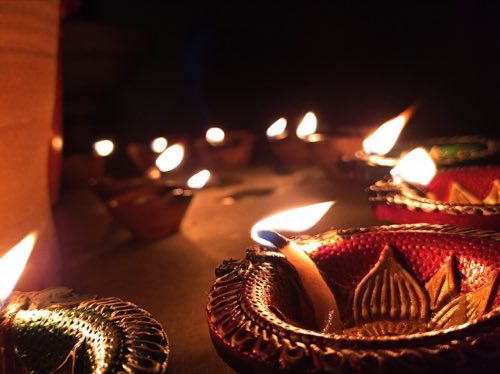
Photo: Keval Tank · CC BY-SA 4.0 · via Wikimedia Commons
I'm in my second year of NEET prep, sitting in my room in Mangaluru, and the thing I think about most at night isn't an organic chemistry mechanism. It's my ajji's hands, mixing batter for neer dosa without a single measuring cup.
Let me explain.
The recipe that isn't a recipe
My grandmother makes the best neer dosa, and a steamed rice dumpling called kotte kadubu, which is cooked inside a jackfruit-leaf basket. I asked her once, "Ajji, how much rice, how much water?"
She looked at me like I'd asked her how much air to breathe. "Swalpa nodi, aagutte." Roughly: look a little, it will happen. Another time: "Tumba beda, swalpa saaku." Not too much, a little is enough.
Her instructions, if I wrote them honestly, would look like this:
- "Soak the rice till it feels soft between your fingers."
- "Grind until it is the colour of a ripe coconut milk." (Obviously nobody has ever put that in a textbook.)
- "The batter should be thin, like water. When it falls from the ladle, it should run, not drop."
- "Heat the pan until a drop of water runs around and dances." (I looked this up later. It's called the Leidenfrost effect: on a very hot surface, the water drop floats on a layer of its own vapour. My ajji has been doing physics for sixty years with no textbook.)
None of this is in grams. All of it is in senses: touch, sound, colour, smell. And the language she uses for it is Kannada, with words that don't translate cleanly. When she says a dish is aayitu (done), she doesn't mean a timer rang, she means it smells right.
What is actually getting lost
I speak Kannada at home with Amma and Ajji, but I think in English when I study. All my science words, "mitochondria", "refractive index", "hydrogen bond", I know in English. I don't know their Kannada names. I realised that when Ajji asked, "What are you reading, maga?" and I couldn't explain my biology chapter to her in her own language. She just nodded and said, "tumba oduttiya" (you study a lot). I wanted to cry a little.
Mangaluru is also a place with Tulu, Konkani and Beary spoken around me. I understand more than I speak. When my friends speak Tulu at the market, I catch maybe half. Every year it's a little less, because school, coaching and the phone are in English.
The "regional language vs English" argument
I know this one is a fight in many families, so here's my honest opinion, which might change.
English isn't the enemy. It's how I read my NEET books, how I'll study medicine, how I'll talk to people across India. I'm not giving it up and nobody should be made to feel guilty for it.
But I don't think it's either/or. My mother tongue is how I hug my grandmother in words. It's the way my family jokes. A recipe isn't just ingredients; it's the way she says "swalpa nodi", the sentence, the tone, the hand on my shoulder. When the language goes, those things go with it, and no app can bring it back.
My teacher once said children understand new ideas faster in the language they speak at home. I'm not an expert on that, so I won't claim it as fact. But I do notice that when Ajji explains something in Kannada, I understand it with my whole body in a way I don't with English.
What I started doing
- Ajji recipe nights. Every Sunday, one dish. I stand next to her with a notebook and write down her words exactly, in Kannada script as best I can, and under it what it means in English and what quantity I think she used. After she's done, I weigh the rice and measure the water so there's a rough measurement too.
- A word list. I'm keeping a page called "Ajji's words" with new ones each week. Last week I added bisi bisi (hot hot) and sakkath (excellent).
- Recording her. With her permission, short voice notes on my phone. She enjoys it more than I thought. She narrates like a cooking show host.
- Learning science words in Kannada. I looked up "chlorophyll" and "cell" in Kannada for fun. It's weirdly satisfying to tell Ajji about the leaf in her language.
What I realised
I'm preparing for a competitive exam in a language that isn't hers. I'm also trying to carry something that doesn't fit in an exam syllabus. And honestly, doing both is making my drop year feel less lonely.
If you have a grandparent with a special way of cooking or speaking, ask them for one recipe before you're "too busy". They won't be hurt if you write it down. They'll be happy someone wanted to know.
12 responses
Sign in to join the conversation.
[+][–]Lakshmi TripathiDropperSample· 16d ago
"Doing physics for sixty years with no textbook." I'm keeping that sentence. My paati in Coimbatore measures with "oru kai" (one handful) and her handful is somehow always the same. Mine is not.
[+][–]Pooja Iyer12thSample· 16d ago
omg the Leidenfrost thing!!! I'm so dramatic about this but I teared up a bit. My paati makes filter coffee by smell and I always lose the exact taste when I try. Also you should absolutely record her, I wish I had started earlier.
[+][–]Yash Tiwari11thSample· 16d ago
Bhai mere ghar mein dadi Awadhi mein baat karti hain aur main usse half Hindi half English mein jawaab deta hoon. Tumhari post padhke realise hua ki main bhi kuch kho raha hoon. Will start a notebook too.
[+][–]Kavya NaikDropperSample· 16d agoAuthor
please do!! write her exact words, even if the spelling is wrong. the sound matters more than the spelling
[+][–]Riya Singh12thSample· 15d ago
This is gorgeous. My nani says "rooh khush ho gayi" when food is really good, literally "the soul got happy". English has no sentence that does that job. Some feelings only come in one language.
[+][–]Harsh Gupta12thSample· 15d ago
Counterpoint (I can do a serious one sometimes): honestly English is useful, and a lot of us won't get a job or a college seat without it, so I don't love the "preserve at all costs" tone some people have. But your plan isn't that, it's just "also keep this", and that's totally fair.
[+][–]Kavya NaikDropperSample· 15d agoAuthor
100% agree, that's exactly what I meant, harsh. Not either/or, just both
[+][–]Rahul DubeyDropperSample· 15d ago
There's a quiet thing that happens in a drop year: you start valuing what you can't put on a mark sheet. Writing down your ajji's words is probably the most valuable thing you'll do this year, and I mean that. Marks come and go. That notebook will still be there in thirty years.
[+][–]Mehak AroraDropperSample· 15d ago
my dadi in Ludhiana makes saag, and when I asked how much salt she said "jitna mann kare" (as much as the heart says). I used to find it annoying and now it's my favourite sentence 🥹
[+][–]Zoya Khan12thSample· 15d ago
A gentle thought: oral recipes also hold a person's love, I think. When you write her words down, you're not only preserving food, you're preserving the way she cares for people. I hope your Sunday nights stay a ritual even after exams.
[+][–]Farhan ShaikhDropperSample· 15d ago
From Mumbai, my family mixes Urdu, Marathi and Hindi at home. Fun fact my aunt says "mix kar" for everything, even recipes. Best thing I picked up this year was the Marathi word for something my aaji cooks. Will make a list of my own.
[+][–]Kavya NaikDropperSample· 15d agoAuthor
love that. send it to me on the next post, I'll make a thread of everyone's family words!