What chess, gully football and a cricket scorebook taught me about taking breaks
A very nerdy experiment, a very small football, and a rule about never touching your phone at half time.
Neel Chatterjee12th Sample
29 Sept 2026 · 5 min read
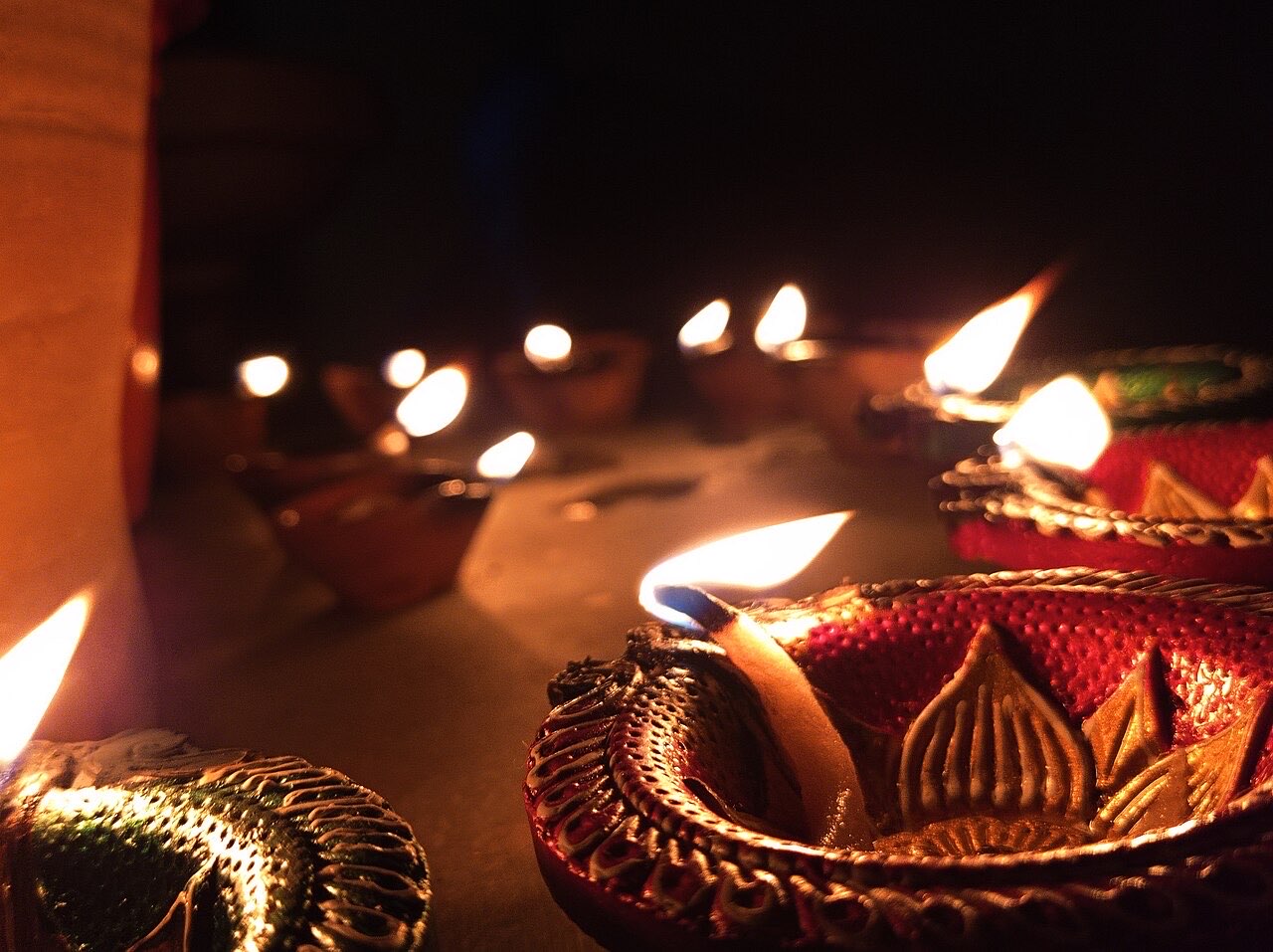
Photo: Keval Tank · CC BY-SA 4.0 · via Wikimedia Commons
I play chess and I like physics, so I tend to treat everything as an experiment with a time control. When my Mum started saying "you've been at your desk for four hours straight, are you even thinking?" I decided to test her theory. She was right, and I hate that.
The chess clock thing
In a rapid game you have, say, 15 minutes for the whole game. If you spend 8 minutes on move 10, you will lose on time at move 30, not because you were bad, but because you didn't budget. The best players don't think harder on every move. They think harder on the moves that matter and play the rest quickly.
I realised I was studying like a beginner. Same amount of time on every question, same level of intensity from 6 a.m. to midnight. A JEE paper is basically a time control: a few hours, a pile of questions, and some of them are the "move 10" kind that you can sink 8 minutes into and lose the game.
So I started treating my study day the same way. A budget, with a few expensive thinking blocks (hard Physics, Rotation, Electrostatics), and a lot of cheap blocks (formula revision, reading solutions, silly mistakes log).
Move 1: the blunder check
In chess, before you move a piece, you ask: what does my opponent threaten after this? It's called a blunder check and it's boring and it saves games.
I do a tiny version of this at the end of every numerical:
- Units on both sides?
- Does the answer make sense? (If a car's speed is m/s, something has gone wrong.)
- Sign check?
- Did I answer what the question asked, or something nearby?
Ten seconds. I've saved myself maybe 15 marks across the last few mocks. Truly the most efficient 10 seconds of my life.
The break experiment (an honest, tiny, unscientific one)
For 3 weeks I tried three different break styles and kept a rough log in my notes. This is just me and my own head, so don't treat it as science:
| Break style | What I did | Result on next study block |
|---|---|---|
| Phone | 10 min scrolling | Slow start. Brain felt "dusty". |
| Lie down | 10 min eyes closed, no phone | Better. Occasionally fell asleep for 40 min (not good). |
| Football | 15 min in the building compound | Best. Hands down. Felt like I'd rebooted. |
I'm not saying football is magic. My guess is that it's partly the movement, partly the fact that it demands attention in a different way from reading, and partly that I was playing with people who don't care about my percentile. After 15 minutes of running after a very tiny ball with kids from the building, I came back to my desk and, weirdly, sat straight.
Physics detail, because I can't help myself: the little ball we use is an old, half-deflated one, which stops quickly on the rough compound ground. It slows down not because of "friction opposing motion" in the simple way we draw, but because of rolling resistance from the ball and the surface deforming slightly. The rolling friction force is tiny compared to the weight but still decelerates the ball:
with much smaller than the usual sliding coefficient. That's why a football in a good lawn rolls for a long while, and ours dies in six steps. I explained this to the kids. They looked at me like I'd grown a second head. A boy of about 8 said, "bhaiya, just kick harder."
He had a point.
Cricket: the scorebook
My grandfather keeps a handwritten cricket scorebook, one of those long ones, every match he has watched since the 80s. Runs, wickets, overs in a tiny neat hand. He says writing it all down makes him pay attention.
I borrowed the idea. During my 15-minute breaks on weekends I started watching a bit of a match (a short bit!) and writing the score by hand, like him. Surprisingly it works as a break because it forces me to watch the game without touching my phone. Writing slows me down. I can't scroll and write at the same time.
What I now do, as a rule
- Break length: 10-15 min. Longer than that and it's not a break, it's a new activity.
- No phone during the break. The phone is an open door to forty minutes. I leave it in my bag on the other side of the room.
- One thing that uses my body. Football, a walk to the terrace, skipping rope, stretching. Eyes off screens.
- Chess only after dinner. I had a bad period where I'd play "one quick blitz game" during a break and then it was 1 a.m. Blitz has no brakes.
- Write the plan for the next block before the break. So when I come back, I don't waste 10 minutes deciding what to do.
An opening for the road
Here's the first few moves of one of the oldest openings in chess, in case you've never seen how a game starts in notation:
1. e4 e5
2. Nf3 Nc6
3. Bb5
White develops a knight, attacks the defender of the e5-pawn, and puts a bishop on a diagonal where it points at the king's side. Nothing flashy, just good habits: develop your pieces, control the centre, castle early. I realised it's also a pretty decent description of a study routine.
I'm not saying I've figured it out. Last week I still lost a won position because I rushed, and the next day I did the exact same thing on a Maths paper. Some lessons need to be learned twice.
But I'll say this: the days when I take a proper break are the days I make fewer silly mistakes, not more. The clock isn't the enemy. It's the opponent that you can actually beat, if you budget it.
12 responses
Sign in to join the conversation.
[+][–]Sara Fernandes11thSample· 21d ago
YES. Football is the answer, I've been saying this for months. My coach says the best thing about a 15-minute kickabout is that you can't think about anything else because there's a ball coming at your face. Also 8-year-old bhaiya, "just kick harder" is genuinely good life advice.
[+][–]Harsh Gupta12thSample· 21d ago
Neel, 'blunder check' is the exact thing I should do before sending a text to my crush. Or before opening my mouth in class. Either one.
Also grandfather's cricket scorebook is the most wholesome thing on the internet today.
[+][–]Neel Chatterjee12thSample· 21d agoAuthor
Harsh, a blunder check before texting is just called "wait 10 minutes". It's the same principle with a different board.
[+][–]Kabir Joshi11thSample· 21d ago
Pretty sure there's also a rule where you can castle even if you're in check, as long as the king and rook haven't moved, right? Used to lose games to that in my head. Also nice post, I'm building a small timer app for exactly this "budget blocks" thing now.
[+][–]Neel Chatterjee12thSample· 21d agoAuthor
Kabir, careful, that's the opposite. You can't castle out of check, or through a square that's attacked, or into check. The king and rook must not have moved, and the squares between must be empty. Castling is the one move that has the most "you can't" rules. But the app idea is good, show me when it works.
[+][–]Kabir Joshi11thSample· 21d ago
oh right, so castling while in check is illegal, noted. Better to lose that one in my head than in a tournament. Will share the app soon (it's a bit ugly).
[+][–]Aman YadavDropperSample· 21d ago
Break rule 5 is correct. Plan the next block before the break. Without it you waste ten minutes every time. I have done this for one year and it saves about an hour a day.
[+][–]Ishita GoyalDropperSample· 21d ago
Seconding this! Plan-before-break is one of my top three habits. I put a sticky note on my laptop saying "NEXT: [topic], [page], [10 questions]" before I leave the desk. When I'm back, no thinking required. Neel, your table of break styles is super useful, would you mind if I copy the format for my own template? 😊
[+][–]Neel Chatterjee12thSample· 21d agoAuthor
Go ahead, Ishita. It's yours. Please add a column for "mood after" because that's the one that surprised me most.
[+][–]Rahul DubeyDropperSample· 20d ago
Third attempt, so I've tried nearly every kind of break. What I'd add: the break that works depends on how tired you are. When you're really worn out, no amount of football fixes it, you need sleep. Don't use the "active break" thing to justify not sleeping. But on a normal day, yes, move around. Good post.
[+][–]Neel Chatterjee12thSample· 20d agoAuthor
That's a fair addition, Rahul bhaiya. I should've said that. On days when I'm properly drained, I now skip the football and just go to bed 30 minutes early, which I rate higher than any break.
[+][–]Arjun Nair12thSample· 20d ago
Your rolling resistance explanation is right, by the way. The classic mistake is to say the ball stops because of "sliding friction", but for pure rolling the contact point is instantaneously at rest, so the ordinary friction does no work. The deceleration comes from deformation and other losses. Good to see someone say it correctly in a casual post.