Reading the news with a pencil: seven questions I ask before I believe a headline
I read three newspapers every Saturday at the library. Same event, three headlines. Here is how I try not to get fooled.
Vivek Mishra12th Sample
13 Oct 2026 · 4 min read
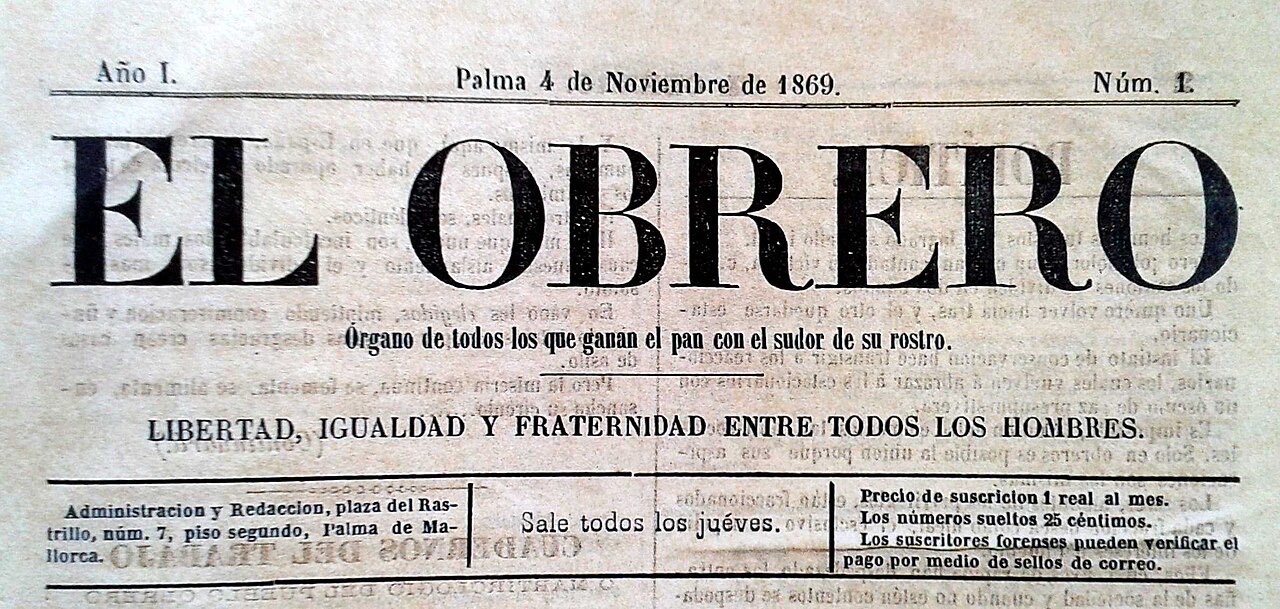
Photo: Paulepascual9 · CC BY-SA 4.0 · via Wikimedia Commons
We don't have a newspaper at home, so I read them at the library on Saturdays. Three papers, same event, three different headlines. The first time I noticed it I thought one of them must be lying. Now I think it is more complicated than that. This is not a perfect method. It's just what I do, in simple English, with a pencil.
1. Is this a report or an opinion?
Newspapers publish news reports and also opinion columns and editorials. A report tells what happened: who, what, when, where. An opinion piece tells what the writer thinks about it. On a phone they often look exactly the same. I look for labels like "Opinion", "Analysis" or "Editorial", or a small photo of the writer next to the title.
2. Who is saying this?
"Sources said", "officials said", "it is learnt that". Anonymous sources are sometimes necessary. But if the whole story stands on one of them, I trust it less. A named person on the record, a document, a court order or numbers I can look at myself are better. Also, alleged, accused and booked are not the same as convicted. A person who is accused is not yet proven guilty. I used to ignore that difference.
3. Numbers need a denominator
"Cases up by 50 per cent." From what to what? If something goes from 2 to 3 that is also a 50 per cent rise. A percentage without the actual numbers tells me almost nothing. I look for the real counts and for the comparison (this month with the same month last year, or with last month?). A graph whose vertical axis does not start at zero can also make a small change look dramatic.
4. Correlation is not cause
Imagine a headline: "Students who eat breakfast score higher." Maybe breakfast helps. Or maybe the families who have time to cook breakfast also have more time to help with study. The headline says breakfast causes marks. The study, if it exists, usually only says the two go together. This is an example I made up to explain, not a real study.
5. What is the date?
Old stories get shared as if they are new. Photos of a flood from a few years ago appear again during this year's rain. I check the date at the top of the article, and the date of the photo or event if it is given.
6. Do other papers agree on the basic facts?
I do not mean "two papers say it so it must be true". I mean the basic facts (what happened, where, when, how many) should be the same in every paper even when the headline and the framing are different. When the basic facts do not match, I wait.
Here is what happened on one Saturday. Water supply in our area was cut for a day for pipeline repair. One paper's headline said "Residents face water crisis". Another said "Pipeline repair completed smoothly". Both were true. They just picked different things to highlight. The first headline made me feel everything is falling apart, the second made me feel everything is fine. The boring truth, from the notice put up by the water department: supply was cut for a day, repair was done, supply came back in the evening.
7. How do I feel?
If a story makes me suddenly angry or scared, and it asks me to share it right now, I stop. Strong feeling is exactly when I check less. People who want to spread false stories know this very well.
What I don't do
I do not think all media is lying. That is also a trap. "Everything is fake" is as lazy as "everything is true". Good reporting exists and it takes real work. I also try to read at least one article a week from a side I disagree with, to see how their argument is built. I still do not enjoy it. And I try to read the whole article, not only the headline, because headlines are written to be clicked.
Local news matters to me because it is the one place where I can check things myself. If the paper says the road near the market has been repaired, I can cycle there and look. Big national stories are harder to verify, so I trust them slowly.
I made a small card with these seven questions and stuck it on my study table. It is not a rulebook. It is a pencil mark in the margin that says: wait a minute. Try it on one article this week and tell me what you find.
10 responses
Sign in to join the conversation.
[+][–]Rahul DubeyDropperSample· 6d ago
My chai-stall university taught me the same thing in a different way. The uncle there reads every paper by 8am and says "dono taraf ki baat suno, phir apna dimaag lagao" (hear both sides, then use your own head). Your list is a more organised version of him. Number 7 is the one most people skip.
[+][–]Farhan ShaikhDropperSample· 6d ago
So if all three papers report the same thing, then it's definitely true?
[+][–]Vivek Mishra12thSample· 6d agoAuthor
Not definitely. Three papers can all be repeating the same press note or the same single source, so agreement can just mean they copied each other. What I look for is more like: independent reporting, named sources, and documents I can check. Agreement is a hint, not a proof.
[+][–]Kabir Joshi11thSample· 6d ago
Good list. For #3, how do you check a chart? I've seen charts in articles that look scary but I can't tell if they're honest.
[+][–]Vivek Mishra12thSample· 6d agoAuthor
I check four small things. Does the vertical axis start at zero (for bar charts it should)? What is the time range, and did they choose a window that makes it look dramatic? Where did the data come from, is there a source line? And how many people or cases are behind the numbers, because a small sample can swing wildly. If any of these are missing, I treat the chart as an illustration, not as evidence.
[+][–]Aman YadavDropperSample· 6d ago
The denominator one. Everyone should know this. 2 to 3 is 50 per cent. Good example.
[+][–]Nisha Verma12thSample· 5d ago
Podcast version of #1: the host's opinion often shows up as "just a quick comment" in the middle of a report. I started pausing and asking "is that a fact or a vibe?" Also #7 is a little scary once you notice it. The most-shared stuff is usually the stuff that made someone angry.
[+][–]Ishita GoyalDropperSample· 5d ago
I'm making a printable version of the seven questions for my planner (and for my dad, who forwards everything 😅). Can I credit you?
[+][–]Vivek Mishra12thSample· 5d agoAuthor
Yes of course, thank you. Please make the letters big, my dad also needs big letters.
[+][–]Dev Agarwal12thSample· 5d ago
Adding one for business news: when a story says "analysts expect X" or "experts say buy Y", ask who gains if you believe it. Also look for labels like "sponsored" or "partner content", which are meant to look like articles but are advertisements. That's not a conspiracy, it's just how the money works.