I keep getting the direction wrong in electromagnetic induction. How do I use Lenz's law properly?
Magnitudes come out right but the direction of the induced current does not. A reliable method for Lenz's law and the other direction rules.
Doubts and answers on every NEET Physics chapter, by students.
Magnitudes come out right but the direction of the induced current does not. A reliable method for Lenz's law and the other direction rules.
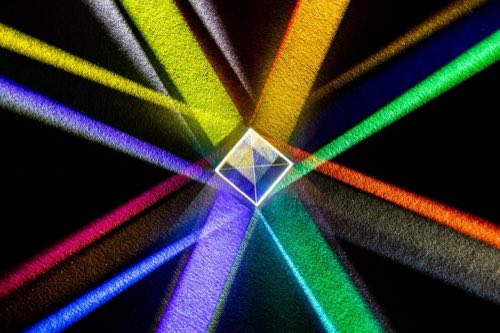
I read Huygens' principle: every point on a wavefront is a source of secondary spherical wavelets, and the new wavefront is the forward envelope of them. NCERT then derives Snell's law for a plane wavefront AB hitting a
So our school lab test has the NCERT activity: 'identify a diode, an LED, a resistor and a capacitor from a mixed collection'. I'm the notes queen but I've never actually held most of these, so I made a table of what I e
Two small things from the measurement section that keep tripping me in my colour-coded notes I have a whole pink page for "zero error" and it still isn't clear . 1. Vernier calipers. Main scale smallest division is 1 mm
NCERT says a choke coil is used to reduce current in an AC circuit with almost no power loss , while a resistor would waste it as heat. I do NOT get this. Current drops in both cases! For a series L–R circuit, I {rms} =
My checklist for System of Particles now has a "centre of mass positions" table, and I mixed up the entries. I need someone to help me check it and explain why the numbers differ. Distances from the centre of the flat fa
Between football practice and homework I just did a worksheet on Oscillations and got most of the 'which of these represent SHM' questions wrong, so I think I'm missing something simple. The ones I got confused on: 1. x
A question about balance points, driver cells and a gradient I cannot picture.
omg I love this chapter and I hate it. 😭 Excess pressure inside a liquid drop is \dfrac{2S}{r} and inside a soap bubble it's \dfrac{4S}{r} . Our teacher says the soap bubble has "two surfaces". But my brain says a bubble
Ahh I need help with a silly doubt that is not so silly. Motion in a Plane, scalars and vectors. NCERT says a vector has magnitude and direction. But current also has a direction we show the arrow in circuits! and yet it
I made a checklist for Gravitation and Kepler's laws is where my ticks stopped. Law 1: orbit is an ellipse with the Sun at one focus. Law 2: line joining the planet and the Sun sweeps equal areas in equal intervals of ti
Making notes for Electric Charges and Fields tables everywhere obviously!! and the first page already has me confused. NCERT lists the properties: additivity, conservation, quantisation. Quantisation says q = \pm ne with